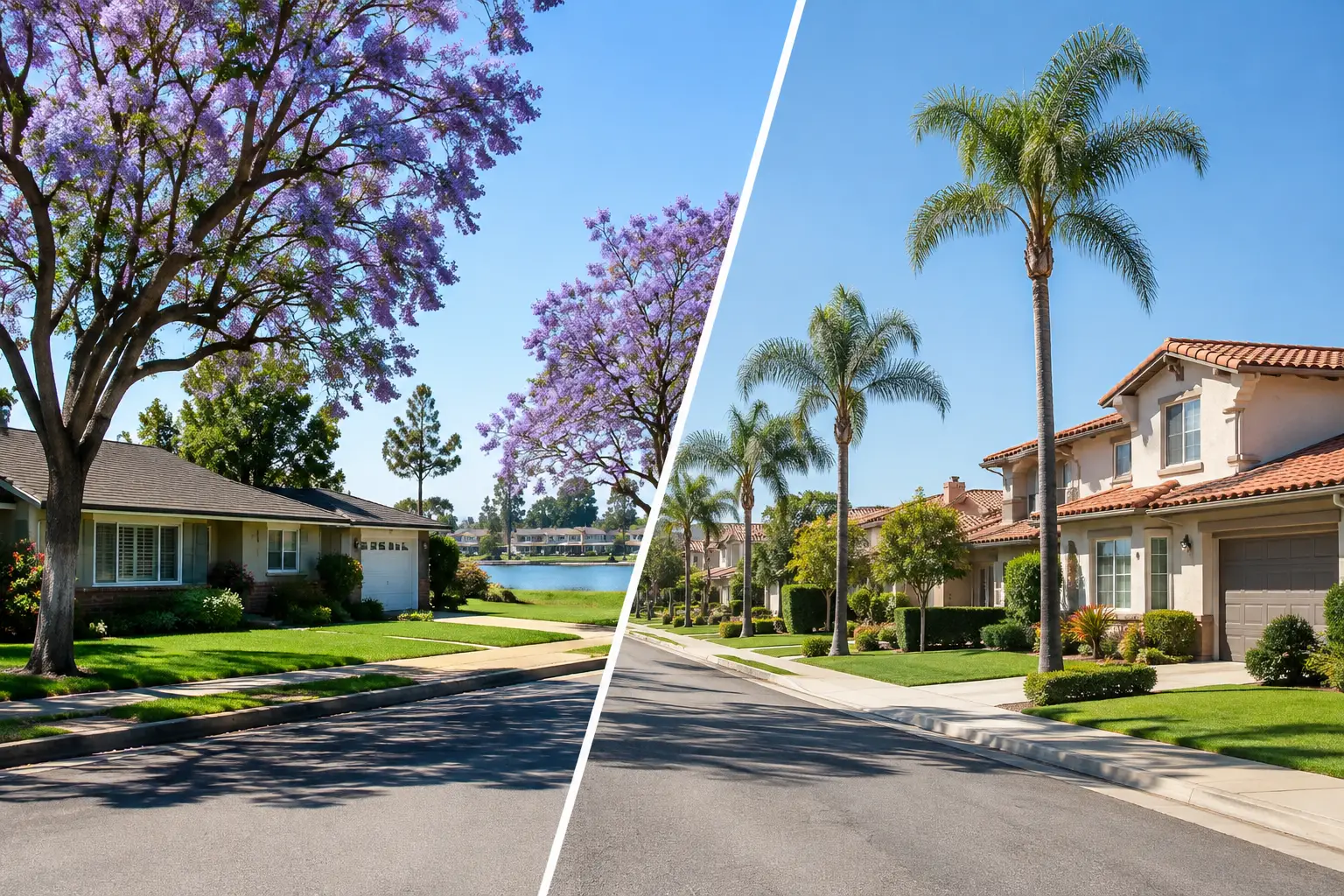
A buyer comparing Lakewood versus Cerritos home prices is usually asking a bigger question than, “Which city costs less?” They are trying to determine what their monthly payment buys, how much space and condition they can realistically expect, and whether the neighborhood will still fit their life a few years from now. Both cities are established choices in southeast Los Angeles County, but the financial and lifestyle trade-offs can feel very different once you start touring homes.
Lakewood versus Cerritos home prices: the usual gap
Cerritos often commands a higher price point than Lakewood, especially for detached homes with more square footage, updated interiors, and locations near highly sought-after schools. Lakewood generally gives many first-time buyers a more approachable entry point into homeownership, although prices can vary sharply from one pocket of the city to another.
That difference is not just about a city name. Cerritos has a smaller supply of homes and a strong reputation among households prioritizing its school district, planned residential feel, and access to employment centers in both Los Angeles and Orange County. Those factors can create steady competition when a well-priced home comes to market.
Lakewood has a broader mix of postwar homes, including many one-story houses with practical layouts. Buyers may find more opportunities to choose between a home that is ready for move-in and one that needs cosmetic updates. A lower purchase price can leave more room in the budget for improvements, closing costs, reserves, or a less strained monthly payment.
Neither city is automatically “better.” A Cerritos home may justify its premium for a household that values its particular school options, location, and larger-home potential. A Lakewood home may be the stronger choice for a buyer who wants a manageable first purchase without stretching every part of their finances.
What your payment looks like beyond the sale price
It is easy to focus on the listing price and overlook the costs that follow it. Two homes that appear close in price can produce noticeably different monthly obligations once property taxes, insurance, homeowners association dues, and loan terms are included.
A higher-priced Cerritos home usually means a larger down payment requirement if you are aiming for a certain loan structure. It can also mean a larger loan balance and more cash needed at closing. Buyers should ask their lender to run payment scenarios for specific purchase prices rather than relying on broad online estimates.
In Lakewood, a more moderate price may improve purchasing flexibility, but condition matters. Older homes can need electrical updates, sewer-line evaluation, roof work, heating and cooling improvements, or other repairs. The inspection period is where a buyer learns whether a less expensive home is genuinely a better value or simply carries deferred maintenance that needs to be addressed.
A useful way to compare homes is to separate your funds into three buckets: your down payment, closing costs, and post-closing reserves. Do not use every available dollar just to win an offer. Having reserves after closing gives a first-time owner room to handle repairs and settle into the home with less pressure.
Home size and condition can change the comparison
Cerritos buyers may see more two-story homes and, in some cases, more living space than similarly priced options elsewhere. But square footage alone does not tell the whole story. A larger home can bring higher utility costs, more upkeep, and a bigger commitment when major systems eventually need replacement.
Lakewood homes are often valued for their straightforward, functional layouts. Some have been extensively remodeled, while others retain original kitchens, bathrooms, or finishes. An original-condition property is not automatically a problem. It can be a sensible path if the major systems are sound and you are comfortable improving the home gradually.
When comparing two properties, look past staged furniture and fresh paint. Ask about the age of the roof, plumbing, electrical panel, windows, heating and cooling equipment, and any permits for recent work. The home with fewer obvious updates may still be the better purchase if it has been carefully maintained.
Why location within each city matters
Citywide averages are useful for orientation, but they are not a pricing tool for a specific offer. In both Lakewood and Cerritos, value is shaped by the street, nearby traffic, school boundaries, home condition, lot configuration, and proximity to everyday destinations.
In Lakewood, buyers often compare areas based on access to Long Beach, major freeways, parks, shopping, and their preferred commute direction. A quiet interior street may attract more interest than a similar home near a busy road. Homes near the city’s borders can also serve different daily routines, which changes how buyers perceive their value.
In Cerritos, school attendance boundaries, access to the Cerritos Towne Center area, and freeway convenience may carry significant weight. Some buyers will pay more for a particular location because it simplifies school drop-offs or a commute toward Orange County. Others may decide that those benefits do not outweigh the price difference.
This is why a comparable sale needs to be truly comparable. A recent sale several blocks away may have different buyer appeal because of its condition, street position, or school assignment. Before making an offer, review recent nearby sales and active competition with someone who can explain those differences in plain English.
The school question deserves a practical approach
For many households, schools are one reason Cerritos enters the conversation. School preferences can influence demand, and demand can influence price. That does not mean every buyer needs to pay a premium for the same factors.
Start with your own priorities. If school options are central to your move, verify boundaries directly and research the programs that matter to your household. Do this before becoming emotionally attached to a particular address. Boundaries and enrollment policies can change, so avoid making assumptions based on an online map or a listing description.
Lakewood can be a compelling alternative for buyers whose priorities include homeownership, access to nearby communities, and a realistic monthly payment. The right decision depends on how you weigh schools alongside commute time, home condition, space, and financial breathing room.
How buyers can make a fair comparison
The best comparison is not Lakewood’s median price against Cerritos’s median price. It is a comparison of homes you would actually consider buying. Choose a target price range, then tour properties in both cities with similar bedroom counts, condition, and commute practicality.
As you tour, write down what each home would require in the first year. Include repairs, furnishing needs, possible improvements, and the cost of keeping an emergency fund intact. A home that looks less polished can be a strong option if it is structurally sound, priced appropriately, and allows you to improve it over time. Conversely, a fully remodeled home may be worth more if you prefer predictability and do not want a long project list after closing.
Also consider the offer environment. A lower list price does not always mean a lower final price when several buyers are competing. Your offer should be based on recent comparable sales, the property’s condition, your financing strength, and your comfort level, not on a number chosen just to outbid someone else.
A decision that should fit your next chapter
Lakewood and Cerritos can both make sense, but they serve different versions of the same goal: buying a home that supports your daily life without creating unnecessary financial strain. Cerritos may be worth the additional cost for buyers who place a high value on its location, school considerations, and home characteristics. Lakewood may offer a more practical first step for buyers who want greater price flexibility and a strong connection to the surrounding area.
The most helpful question is not which city is cheaper. It is which home, in which location, lets you move forward with confidence while leaving room for the life you want to build after closing.